Interconnected Odds: Tracing Dice Probabilities from Craps to Bankroll Choices in Virtual Games and Bingo
Written by Cameron Krüger · Oct 12, 2026
Interconnected Odds: Tracing Dice Probabilities from Craps to Bankroll Choices in Virtual Games and Bingo
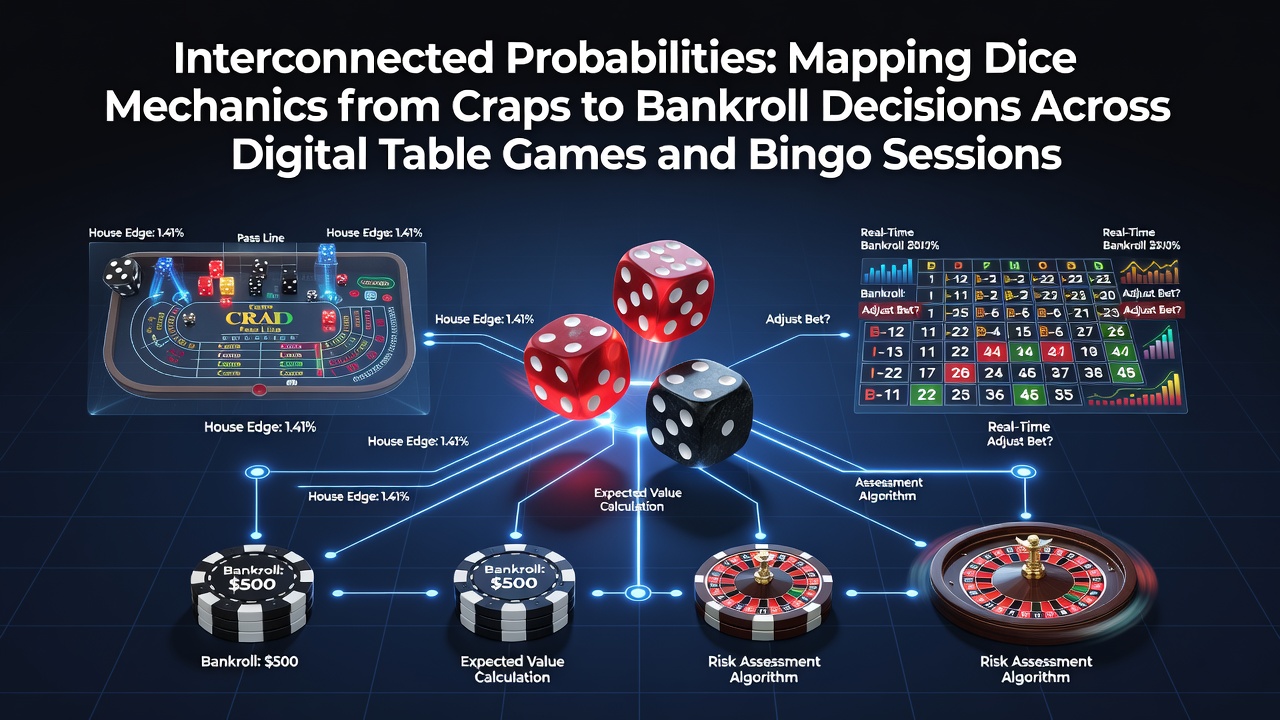
Probability structures in craps rest on the 36 possible outcomes from two six-sided dice, with combinations like 7 appearing six times and 2 or 12 appearing once each, and those frequencies directly shape payout tables and house edges that carry forward into other formats. Digital table games replicate these ratios through random number generators calibrated to match physical dice distributions, while bingo sessions incorporate similar combinatorial principles when players track number sequences against fixed card grids. Observers note that bankroll allocation models often reference these core ratios to determine wager sizing and session length across platforms.
Core Dice Distributions in Craps
Standard craps pass line bets carry a house edge of 1.41 percent because the probability of rolling a 7 before a point equals 6/36 on the come-out roll and shifts once a point is established, whereas don't pass bets sit at 1.36 percent due to the 3 percent push on 12. Researchers at institutions studying gaming mathematics have mapped these exact frequencies to software algorithms used in online versions, ensuring the same 36-outcome matrix applies without deviation. Data from regulatory testing laboratories confirm that certified systems maintain these percentages across thousands of simulated rolls each month.
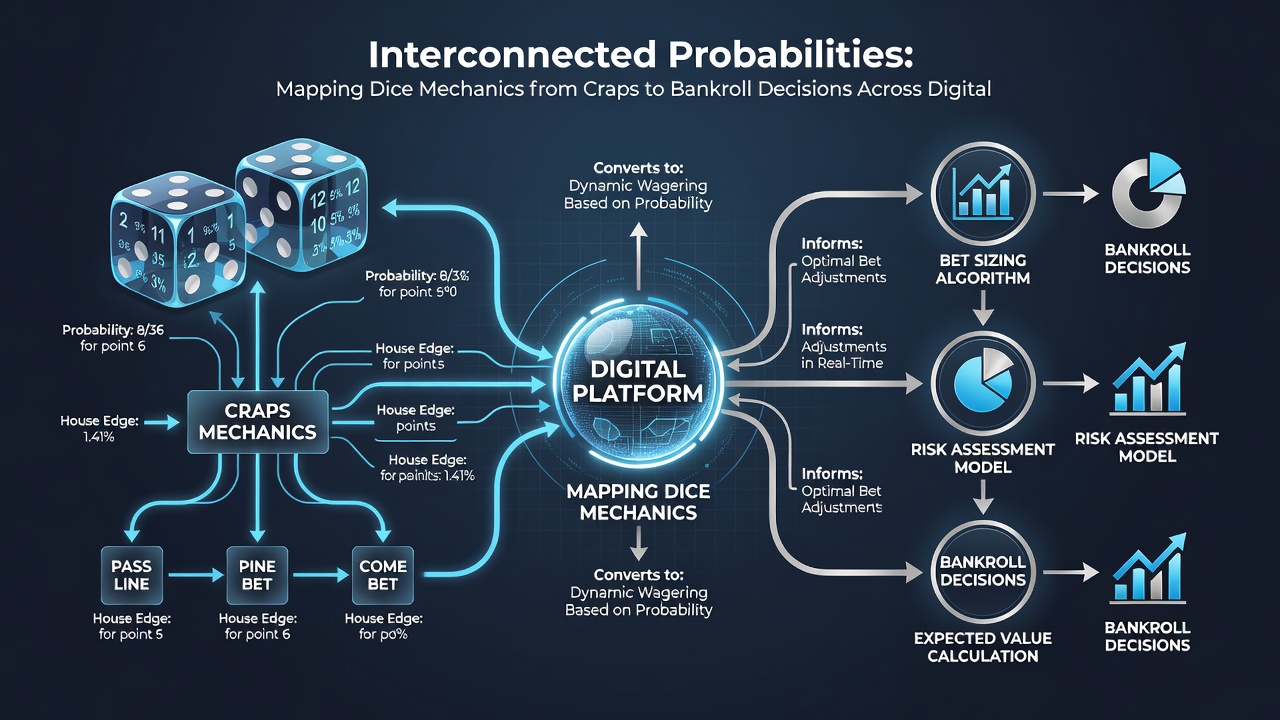
Point numbers such as 4 and 10 require three ways each to appear, while 5 and 9 require four, and 6 and 8 require five, creating layered decision trees that players navigate when placing odds bets behind the pass line. Those additional odds bets carry no house edge, which alters overall expected value calculations when bankrolls are distributed across multiple wagers in a single round. Figures released by the Nevada Gaming Control Board in October 2026 showed continued growth in digital craps participation, with transaction logs indicating average session durations tied closely to these probability clusters.
Transfer to Other Digital Table Formats
Blackjack and roulette implementations on the same platforms borrow modular probability elements, such as the 52-card deck permutations in blackjack or the 38-pocket wheel in American roulette, yet the underlying random generation engines often inherit calibration standards first validated in craps testing suites. One study published by the University of Nevada Reno gaming research group detailed how variance formulas derived from dice outcomes help model drawdown risks when bankrolls move between games with differing volatility profiles. Bankroll management software now incorporates these cross-referenced metrics to flag when a session's expected loss rate exceeds preset thresholds.
Live dealer interfaces stream results that mirror physical dice rolls, and operators publish return-to-player percentages calculated from aggregated data across craps, baccarat, and sic bo tables. The Australian Gambling Research Centre released quarterly metrics in late 2026 that tracked how players adjusted stake sizes after sequences of low-probability outcomes, patterns that align with known dice frequency distributions carried over from traditional craps.
Bingo Grids and Shared Combinatorial Logic
Bingo cards contain 24 numbers plus a free space arranged in five columns, and the probability of completing lines depends on the remaining numbers drawn from a pool of 75, creating sequential decision points comparable to establishing points in craps. Software providers apply the same certified random number generators to bingo draws, ensuring uniform distribution across the number set and allowing direct comparison of hit rates to dice outcome frequencies. Bankroll models used by session planners factor in the average numbers required to reach bingo, typically between 15 and 20 draws in standard 75-ball formats, to project total spend per card purchased.
Multi-card play increases exposure in a manner analogous to placing multiple craps bets per round, and operators track aggregate win rates that reflect these combinatorial overlaps. Industry reports from the European Gaming and Betting Association indicate that integrated platforms record higher average deposits when users transition directly from craps-style table games to bingo rooms, consistent with probability-informed staking patterns.
Bankroll Allocation Across Platforms
Expected value calculations that originate with craps dice tables extend to digital environments by scaling wager amounts according to each game's standard deviation, and bingo sessions fit into the same framework when card purchases are treated as repeated trials with known success probabilities. Portfolio approaches recommended in gaming mathematics literature distribute funds so that high-variance segments, such as hardway bets in craps, receive smaller allocations than steadier options like pass line with odds. Digital interfaces display real-time statistics that mirror these models, allowing users to adjust exposure based on observed versus theoretical frequencies.
Cross-game tracking tools aggregate results from table games and bingo into unified dashboards, revealing how cumulative return rates align with the foundational 36-outcome dice matrix. Those dashboards frequently reference probability tables first standardized for craps and later adapted for bingo number sequencing, producing consistent guidelines for session bankroll caps and stop-loss triggers.
Conclusion
Probability linkages that begin with two-dice combinations continue to inform software design, regulatory oversight, and player decision frameworks across digital table games and bingo environments. Data sets compiled through 2026 demonstrate that these shared mathematical structures support uniform bankroll methodologies regardless of game format, with testing standards and reporting requirements maintaining alignment between physical origins and virtual implementations.